The Royal Shakespeare Company, the fashion label and the IDF

Artists for Palestine UK is dismayed to learn of  the Royal Shakespeare Company’s collaboration with the US fashion label Alice + Olivia on “a licensed apparel collection inspired by Shakespeare’s literary works”. A + O  is a label that declared itself “in support of Israel” while Israel was indiscriminately bombing civilians in Gaza and had already killed hundreds of children. As the death toll rose, the label hosted a fund-raising event for US Friends of the Israeli Defence Force, designated ‘official US partner’ by the Chief of Staff of the Israeli military. The RSC’s relationship with Alice + Olivia was brokered  by  Brandgenuity, a licensing and marketing company which also declares its ‘proud support’ for Israel. From October, Alice and Olivia’s collection is on sale in its stores, crediting the RSC.  

RSC alumni have called on the company to change direction. Today, following Artists for Palestine UK’s findings and the subsequent backlash from artists, The Stage reports that RSC artistic directors say they will convene a special meeting of its ethics committee.

Playwright Caryl Churchill says,  “Come on RSC, you say you support equity and justice. How have you blundered into an involvement with this company that states its support for Israel and the IDF while they commit extraordinary atrocities?”

Actor Paapa Essiedu says, “When the RSC cut its sponsorship links with BP in 2019, it said it would only enter partnerships that reflected its integrity. I am disappointed that it is not sticking to that principle. Genocide is being committed on the Palestinian people by the IDF. It should be out of the question for the RSC to maintain links with companies that fundraise for and support this.”

The RSC prides itself on its support for human rights. It has been ‘humbled and honoured’ to welcome the Ukrainian Theatre Studio of IDPs to Stratford. Its policies declare a commitment to ‘equity, diversity, justice and inclusion in everything we do’. Yet that commitment has not been extended to Palestinians. 

Last month Amnesty International called on public institutions and companies to ‘live up to their obligations under international law’ to ‘put an end to the genocide of Palestinians in the Gaza Strip’. “The public at large,” said Amnesty, “must demand that they do so”: “the actions of everyone must match the gravity of the situation, amidst a staggering loss of Palestinian lives.”

Actor David Calder says,  “I’m aware as an Associate Artist of the RSC that we have a declared commitment to upholding’ human rights’. However, its collaboration with fashion label Alice and Olivia who help raise money for the IDF flies in the face of this and makes a mockery of it. The IDF stands credibly accused of Genocide and as such the RSC is open to the accusation of complicity. Hopefully it will withdraw immediately from this appallingly compromised relationship.”

Artists for Palestine UK commented:   “We are relieved to hear that in response to complaints from artists, the RSC leadership has said it will take this ‘really important topic’ to its ethics committee. Sustaining a relationship with companies that stand ‘proudly’ in support of Israel and raise funds for its army cannot be regarded as normal business practice. In order to live by its own principles, the RSC can now show leadership by adopting a policy that says it will not work with, nor receive money from, bodies that advocate for a state that is in total breach of international law and is carrying out a genocide. The RSC’s processes of due diligence must reflect this commitment.”

Model Ethical Policy for Cultural Institutions 

What are the responsibilities of a British cultural institution, organisation or charity when the gravest of crimes are being committed in plain sight in Gaza? What meaningful steps can a cultural institution take at a time when arts workers, artists and communities feel frustrated and distraught at their collective failure to prevent genocide?

In September Amnesty International published a report that called on public institutions, as well as states, to live up to their obligations and responsibilities under international law and standards with regards to Israel’s genocide, military occupation and system of apartheid against Palestinians. Amnesty adds: 

“The public at large must demand that they [institutions] do so … The actions and commitments of everyone – states, public institutions, companies and the public – must match the gravity of the situation amidst a staggering loss of Palestinian lives, [and] the irreparable damage caused to Palestinians”.

Palestinian civil society has for over two decades consistently called on international cultural workers and cultural organisations, at a bare minimum, to abide by the principle of ‘do no harm’, and crucially, to end the complicity of their own governments and institutions in Israel’s crimes.

Arts institutions in Britain can show leadership by embedding ethical policies that uphold a commitment to “universal values and international obligations that are the foundations of the global multilateral system” (Amnesty). Taking this action now will help build the resilience of the organization, protect human rights for all, and positively impact the cultural climate in this country for years to come.

While the vast majority of British arts and culture organisations have relatively transparent (though often inadequate) policies relating to inclusivity, anti-discrimination, accessibility, and sustainability, very few have incorporated a basic respect for international law into these policies. In practice, this means that while racist, homophobic or otherwise discriminatory behaviours can be rooted out, individuals or bodies that are complicit in or that justify war crimes, systemic racial violence, genocide, or apartheid are tolerated, and their positions effectively normalised.

The model policy below, developed by the Palestinian Performing Arts Network, shows how cultural institutions can make clear that they are committed without exception to a  practical and consistent commitment to universalist values.

We believe this model must be the absolute baseline for organizations – the very least they can do – given Israel’s genocide in Gaza, its underlying system of apartheid against the Palestinian people, and the damage Israel’s impunity is doing to global legal norms and protections.

Model Policy on Ethical Programming and Partnerships for Cultural Institutions

This cultural institution commits to uphold universal principles of human rights and international law, to refrain from doing or contributing to undue harm, and to ensure basic ethical standards.

Based on this:

  1. Programming: This institution will not include in its programming artists, cultural groups/bands/orchestras, or cultural products that are produced by entities that are verifiably complicit in, advocate for, or whitewash grave violations of international law (such as war crimes, crimes against humanity and genocide), racism or racial violence.
  1. Sponsorship & Funding: This institution will not accept sponsorship/partnership or other forms of funding from individuals, corporations or other entities that are verifiably complicit in, advocating for, or whitewash grave violations of international law (such as war crimes, crimes against humanity and genocide), racism or racial violence.

*photo credit: Palestinian Performing Arts Network

Olivia Colman, Javier Bardem, Mark Ruffalo Among 1,300+ Refusing Collaboration with Israeli Film Institutions Complicit in Gaza Genocide

In a historic move, Oscar, BAFTA, Emmy, Cannes, Berlin, Venice, César, Goya, and Peabody Award winners are among more than 1,300 filmmakers who launched a pledge Monday saying they refuse to work with Israeli film institutions “implicated in genocide and apartheid against the Palestinian people.”

Actors Olivia Colman, Aimee Lou Wood, Susan Sarandon, Mark Ruffalo, Riz Ahmed, Tilda Swinton, and Javier Bardem, and writer-directors Yorgos Lanthimos, Asif Kapadia, Ava DuVernay, Emma Seligman, Boots Riley, Adam McKay, and Joshua Oppenheimer say: “In this urgent moment of crisis, where many of our governments are enabling the carnage in Gaza, we must do everything we can to address complicity in that unrelenting horror.”

Continue reading

Victory for staff as Royal Ballet and Opera pulls Israel production

  • 182 members of The Royal Ballet and Opera said they “reject future performances in Israel”. They stand in solidarity with performer who protested with Palestinian flag.
  • CEO announces decision to cancel 2026 production in Israel.

The Royal Opera has pulled its planned 2026 production run of Tosca at the Israeli National Opera (INO) in Tel Aviv. The website of the INO has now dropped all reference to the Royal Opera House. 

Artists for Palestine UK has learned that Alex Beard, CEO of the Royal Ballet and Opera told staff on 1st August that “we have made the decision that our new production of Tosca will not be going to Israel”.

Continue reading

Paul Weller, Tilda Swinton: stop the proscription of Palestine Action 

On Sunday, from Glastonbury’s Other Stage, singer-songwriter Nadine Shah read out a passionate statement against the government’s decision to ban Palestine Action.

Today, in an open letter published below, leading artists including musicians Paul Weller, Massive Attack’s Robert del Naja, Brian Eno and US artist Reggie Watts have joined Shah in calling for the ban to be dropped and for the government to stop supplying arms to Israel. 

Continue reading

Caryl Churchill Pulls Donmar Play Over Barclays’ Role in Arming Israel

  • Caryl Churchill walks away from Donmar Warehouse over its sponsorship with Barclays
  • Stephen Dillane, Samuel West, Bilal Hasna among artists backing Churchill’s decision, urging Donmar to drop the bank
  • Move follows growing pressure on UK arts institutions, including Sadler’s Wells and the Almeida, over ties to complicit funders

Caryl Churchill, one of Britain’s greatest living playwrights, has withdrawn a play from the Donmar Warehouse upon learning that the theatre receives support from Barclays, which invests over £2 billion and provides £6.1 billion in loans and underwriting to nine arms companies supplying weapons to Israel.

Speaking about her decision, Caryl Churchill said:

“Theatres used to say they couldn’t manage without tobacco sponsorship, but they do. Now it’s time they stopped helping advertise banks that support what Israel is doing to Palestinians”

Her action has been met with widespread support. Over 300 theatre workers have signed an open letter, published in full below, backing Churchill and urging the Donmar Warehouse to cut ties with the bank.

Actors Alex Lawther, Asif Khan, Maggie Steed, Harriet Walter and Juliet Stevenson say they share Donmar Warehouse’s mission to foster “a more empathetic society”, and this is precisely why “they can no longer overlook Donmar’s relationship with Barclays, which enables Israel’s genocide, military occupation and apartheid against Palestinians”.

Barclays currently invests over £2 billion and provides £6.1 billion in loans and underwriting to nine arms companies whose technology and weapons are used in Israel’s brutal assaults on Palestinians. 

Barclays is also the only UK-headquartered bank that acts as a ‘primary dealer’ of Israel government bonds, directly helping the state raise funds to finance the mounting cost of its military assaults.

The bank’s role in other human rights and environmental harms has also come under fire. Last year, Barclays was named the largest financier of the fossil fuel industry in Europe for the eighth consecutive year.

Directors Richard Eyre, Ian Rickson, Maxwell Stafford-Clark, writer Simon Stephens and theatre-maker Tim Crouch are among those who say that “Donmar Warehouse’s relationship with Barclays directly contradicts its commitment to “keep environmental responsibility at the heart of our work”’.

Churchill’s withdrawal comes amid growing calls across the UK cultural sector for institutions to cut  their ties to organisations complicit in Israel’s genocide against Palestinians in Gaza. 

  • In May 2025, 435 theatre and arts professionals demanded that the Almeida Theatre end its relationship with Bloomberg Philanthropies. 
  • Since November 2023, Sadler’s Wells has faced growing pressure over its sponsorship from Barclays, whose Chairman Nigel Higgins also chairs Sadler’s Wells Board.
  • In September 2024, over 1,000 artists and Islington residents, including Maxine Peake, Juliet Stevenson, and Jeremy Corbyn MP, signed an open letter demanding Sadler’s Wells sever its ties with the bank.
  • Later that month, dancer Eve Stainton withdrew from the Sadler’s Wells East launch programme, citing “moral objections” to its Barclays sponsorship.

Culture Workers Against Genocide, who co-organised the open letter, said:

“There is an ethical dissonance amongst arts leaders on six-figure salaries partnering with corporations whose actions contradict the values their institutions claim to uphold. Caryl Churchill’s principled stand reflects the growing refusal among artists to stay silent while the arts are used to launder the reputations of corporations complicit in genocide.”


Read the letter in full:

Dear Tim Sheader and Henny Finch,

Continue reading

Leading lights demand Almeida Theatre cut ties with Bloomberg over war crimes

Jack Reynor, Billy Howle, Zoe Telford and Caryl Churchill are among leading lights of theatre and screen demanding Islington’s Almeida Theatre end its partnership with Bloomberg Philanthropies over its “links to human rights violations and war crimes” and in particular, its “direct and ongoing support for illegal settlements” in the occupied Palestinian West Bank.

In the letter published below, 435 theatre and arts professionals, forty of whom have current or historic links to the theatre – including former associate director Ben Harrison, actors Tamara Lawrance, MyAnna Buring and Hayley Carmichael, composer Jocelyn Pook and writer David Farr – say the issue was raised privately with the theatre months ago, but that the theatre failed to act on the information it was given.

Continue reading

‘A Licence to Kill’: UK government to face High Court over arms to Israel

Award-winning actor Juliet Stevenson has released the short film, ‘A Licence to Kill’, calling on the UK government to stop providing Israel with the weapons it uses to commit what Amnesty International described last week as a “live streamed genocide” against Palestinians in Gaza.

For nearly two years, the government has avoided accountability for its actions. Now, Global Legal Action Network (GLAN) and leading Palestinian human rights organisation Al-Haq, will present their challenge to government policy at the High Court in a four-day hearing, beginning on 13th May.

Continue reading

Dozens of ex-Eurovision contestants demand exclusion of Israel from contest

Britain’s Mae Muller and Bianca Nicholas joined Charlie McGettigan, Salvador Sobral and dozens of former Eurovision contestants in calling on the European Broadcasting Union (EBU) to ban Israel’s public broadcaster KAN from the popular song contest.

Over 70 previous participants, who include songwriters, lyricists and other creatives from across Europe, accuse KAN of being “complicit in Israel’s genocide against the Palestinians in Gaza”.

In a letter published below ahead of the Eurovision finals on May 17, the artists say “by continuing to platform the representation of the Israeli state, the EBU is normalising and whitewashing its crimes”.

Continue reading

Royal Television Society U-Turns on Special Award for Palestinian Journalists

In response to a statement tonight by the Royal Television Society, UK Screen Industry has said:

“We welcome the Royal Television Society’s U-turn in reinstating the Special Award for the courageous Palestinian journalists of Gaza. However, the charity’s statement does little to address or allay our concerns.

“The RTS now claims the award was simply ‘paused’ due to unspecified ‘potential for controversy’ at its Television Journalism Awards on 5 March – a claim that has never previously been mentioned. It also refers to a ‘previously announced review process’ of which we are entirely unaware.

“It is clear to all that this award must be presented at the RTS Programme Awards on 25 March with the full recognition and honour these journalists deserve. Yet the RTS continues to prevaricate.

Continue reading

Leading Broadcasters Demand Reinstatement of Special Award Recognising Gaza Journalists

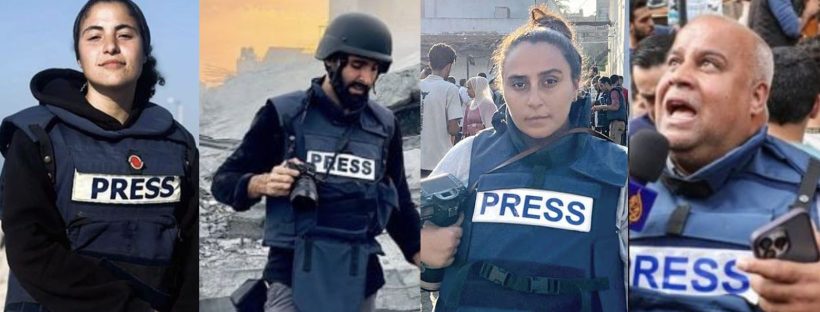
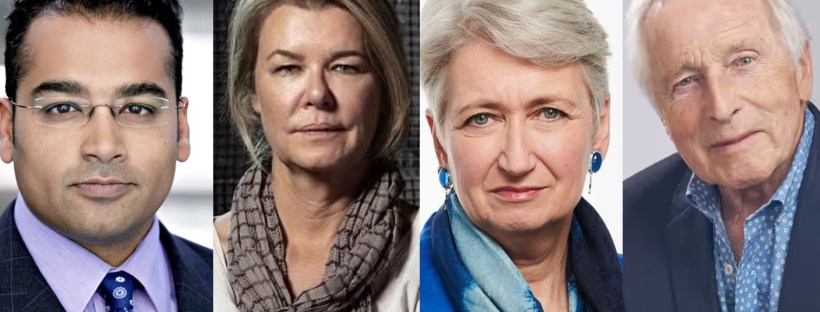
Broadcasters Jonathan Dimbleby, Lindsey Hilsum, Sangita Myska, Matt Frei, Krishnan Guru-Murthy, Alex Crawford, Fergal Keane and Orla Guerin are among more than 400 TV and journalism professionals who have sent a letter to the leadership of the Royal Television Society (RTS) demanding transparency around its decision-making after the charity abruptly cancelled its Special Award for journalists in Gaza last week. 

The letter (copied in full below) “strongly urges” the RTS to reinstate the Special Award at their forthcoming Television Awards ceremony on 25 March.  

The program-makers, who include Channel 4’s chief correspondent Alex Thompson, executive producer and former editor of Channel 4 News Ben de Pear, Oscar-winning directors Kevin MacDonald and Asif Kapadia, and RTS- and Emmy-winning director Ramita Navai, say the RTS’ cancellation of the award “reveals a concerning lack of independence, due process and accountability” . 

Continue reading

BBC bosses ‘throwing Palestinian children under a bus’

Following Tuesday’s Culture, Media and Sport Committee session on the BBC axing of Gaza: How to Survive a Warzone, a move which prompted concerns of racism and censorship from 1000+ programme-makers, Artists for Palestine UK said:

“Rupa Huq asked about the risk of ‘throwing the baby out with the bathwater’. We say Tim Davie and Samir Shah are throwing Palestinian children under the bus.

“BBC bosses must explain how they plan to safeguard the children who participated in the film. Their lives are in danger as Israel cuts off aid and threatens to collapse the ceasefire in Gaza. How will Britain’s public broadcaster ensure it isn’t putting a target on innocent kids’ backs?

“We welcome Tim Davie saying an independent review of the BBC’s Middle East coverage is appropriate and urge that this accounts for its abject failure to stand by the Palestinian voices it features. We all know Israeli guests would never be treated this way.”

TV industry urges MPs to press BBC execs over Gaza documentary removal

UK TV and film programme-makers have urged a panel of MPs to press BBC executives on Tuesday over the controversial removal of a documentary about children in Gaza.

The UK Screen Industry group sent a letter (copied below) to members of the House of Commons’ Culture, Media and Sport (CMS) Committee on Monday, the day before they grill BBC director-general Tim Davie and chair Dr Samir Shah.

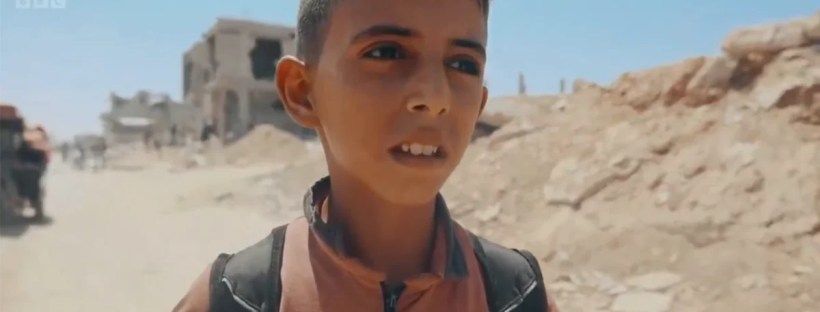
The group urged the lawmakers to ask Davie and Dr Shah to “clarify the specific editorial standards relied upon and the decision-making processes that led” to the axing of Gaza: How to Survive a Warzone, a move which has prompted concerns of racism and censorship.

Continue reading

Our response to the BBC’s shameful statement on ‘Gaza: How to Survive a War Zone’

Following Thursday’s BBC board meeting and statement on Gaza: How to Survive a War Zone, Artists for Palestine UK said:

“We are appalled that the BBC has chosen to give credence to a politicised campaign that sought to discredit a documentary about children’s experiences of unspeakable Israeli military violence, because one child’s father was deputy agriculture minister in Gaza. This disgraceful decision comes despite nearly 900 media figures having warned the BBC of the dangers of such an approach.

Reports over the last week have detailed Israel’s detention and torture of hundreds of Gaza’s medical workers. The world has seen images of traumatised and emaciated Palestinian captives emerging from Israeli jails, some with limbs amputated. Rather than adequately reporting on these horrors, the BBC is instead removing a documentary about children in Gaza because of misleading claims about the identity of one child’s parent.”

1,000+ programme-makers condemn censorship and racism after BBC pulls Gaza documentary

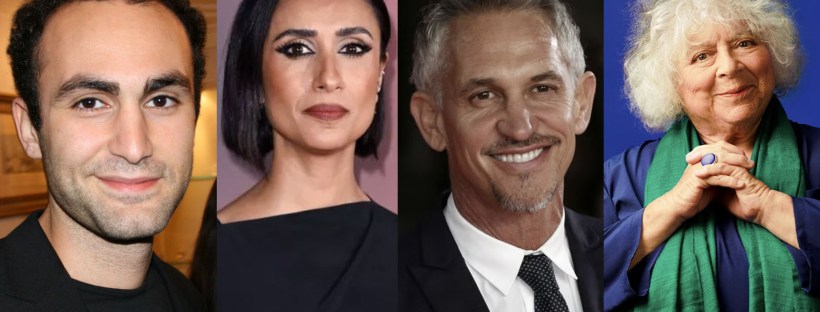
Gary Lineker, Khalid Abdalla, Anita Rani, and Miriam Margolyes have joined over 1,000 film, TV, and media workers in condemning censorship and racism after the BBC pulled a documentary about children’s lives in Gaza.

The media professionals, including sixteen BBC staff, sent a letter to the broadcaster’s director-general Tim Davie, chair of the board Samir Shah, chief content officer Charlotte Moore, and head of news and current affairs Deborah Turness on Wednesday. The letter (in full below) condemned a “racist” and “dehumanising” campaign targeting the film Gaza: How to Survive a War Zone, which the BBC removed from its iPlayer streaming service after pressure from supporters of Israel. The BBC’s board is set to discuss the documentary on Thursday.

Continue reading

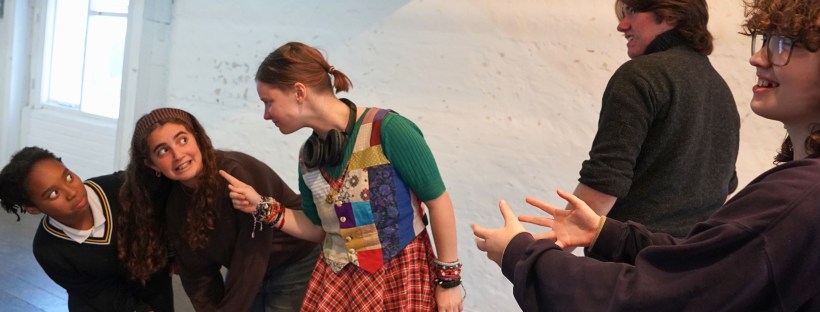
Leading artists condemn campaign against ‘Let it be a Tale’ theatre production

Leading artists, including writer Michael Rosen, actors Billy Howle and Khalid Abdalla, playwrights Caryl Churchill and Tanika Gupta and composer Orlando Gough, have spoken out against attempts to damage the reputation and stifle the work of Brighton’s ThirdSpace theatre company. 

ThirdSpace works with young people. Its latest show, Let it be a Tale, is scheduled for performance in venues across the city before Christmas. 

‘We all carry our stories with us and pass them down,’ reads the company’s description of the show. ‘When someone dies, we keep their memory alive through stories. When cultures are under threat, we keep them alive through stories.’

Continue reading

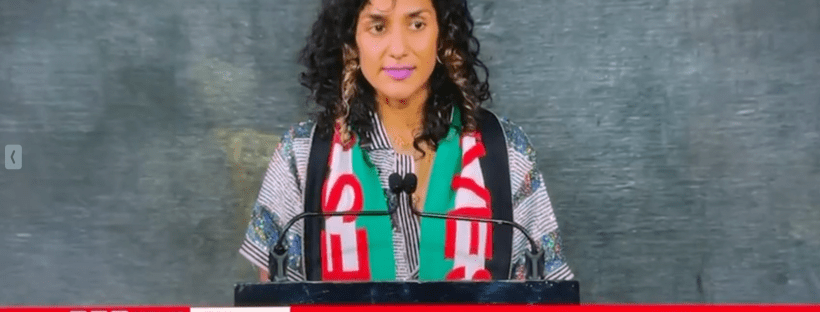
Turner Prize winner’s inspirational acceptance speech

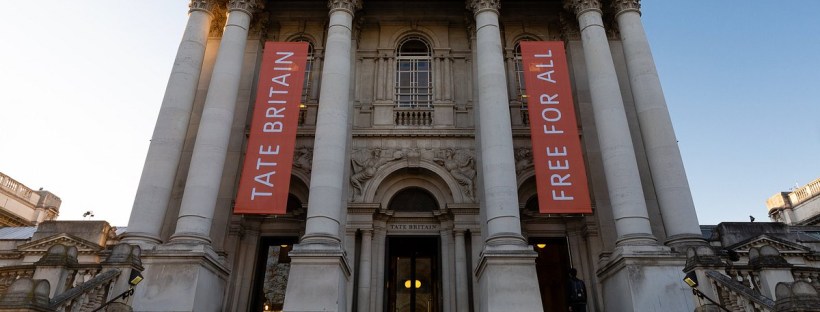
Artist Jasleen Kaur’s acceptance speech was delivered at the Turner Prize award ceremony at Tate Britain and broadcast live on BBC News Channel, on 3rd December 2024.

‘To the artists, the poets, the parents,
the students who show me the slow and meticulous
work of organising and world building

the folk who orient their lives towards
freedom in practice

not theory

who advocate for life, not death.

Continue reading

Tate, Cut Your Ties With Genocidal Israel

As the atrocities mount up, the silence of UK cultural institutions grows more deafening, the double standards ever more glaring.

In March 2022, a fortnight after Russia invaded Ukraine, Tate cut ties with billionaire donors and Tate International Council members, Viktor Vekselberg and Petr Aven. ‘We will not work with or maintain relationships with anyone associated with the Russian government,’ said Tate.

On Palestine, Tate has made no such statement. On the contrary, it has kept up its relationships with donors and organisations associated with the Israeli government. It has remained silent on Israel’s total destruction of Gaza. 

Now, in the lead up to this year’s Turner Prize awards ceremony, more than 60 artists closely associated with Tate (including three out of four of this year’s Turner Prize nominees, two of its judges, and many former prize winners and nominees) have signed an open letter. Supported by a thousand further signatories in the arts, it calls on Tate’s leadership to cut ties with organisations that are deeply complicit with the Israeli state. 

Continue reading

Genocide, With The United Kingdom’s Blessing

Khalid Abdalla Calls On The Government To End Its Complicity.  

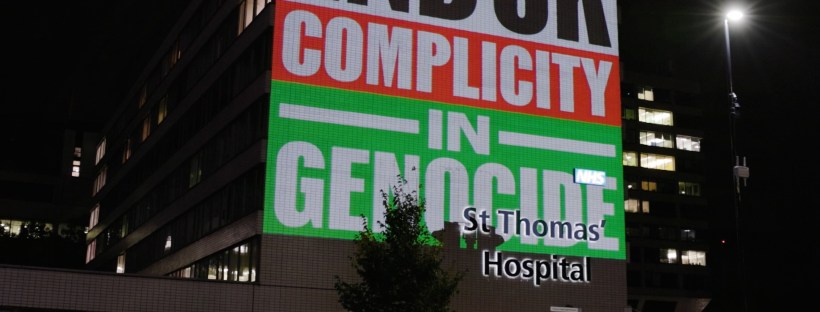
As Israel systematically eradicates the last remnants of healthcare in Gaza, human rights defenders have screened a film on the walls of St Thomas’ Hospital, London.  Actor Khalid Abdalla speaks the words of surgeon Ghassan Abu-Sittah, who will never be able to unsee the horror that has been inflicted on Palestinians.

Watch the video here:

The film highlights the testimonies of doctors who have returned from Gaza – who have survived the deliberate targeting of hospitals and health facilities, who are not among the 986 medical workers killed by Israeli forces. Those who remain are witnesses to a situation just as harrowing as that described by Dr Abu-Sittah. 

Continue reading

‘Every Day a New Atrocity’: Juliet Stevenson calls on government to end supply of arms to Israel

Award-winning actor Juliet Stevenson has released the short film, ‘Every day a new atrocity’, calling again on the UK government to end its complicity in the ongoing genocide in Gaza.

The film was developed by Artists for Palestine UK in support of the legal campaign by the Global Legal Action Network (GLAN) and leading Palestinian human rights organisation Al-Haq, to suspend all UK weapons sales to Israel. Although the government has suspended the export of some weapons, it continues to license the supply of parts that keep Israel’s lethal F-35 jets flying.  Lawyers from GLAN and Al-Haq have warned the government of their criminal liability over the continued exports.

Continue reading