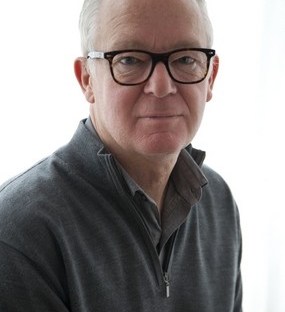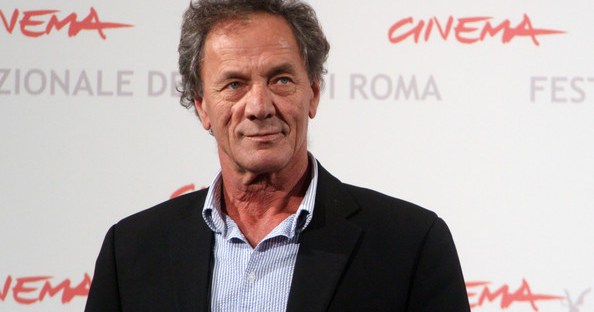
Mohammed Bakri, actor

ARTSWATCH November 2016

The dangers of satire

blog by ‘John Brown’ in +972 magazine (27thNovember) reports on recent experiences of the Bedouin blogger Anas Abudaabes.

The wild fires that swept through Northern Israel in mid-November provoked some Facebook posters in neighbouring countries into words of celebration. Abudaabes responded satirically, writing that the way to earn the respect of posters like these would obviously be to light more fires.

In paranoid and authoritarian states, satire is often a weapon that endangers the satirist. Israel’s legal system chose to take the words of Abudaabes literally, as an incitement to arson. On 25th November, Judge Alon Gabison ruled that there was reasonable suspicion that the post included incitement to harming state security, and that the author of the post should have thought about how others would interpret his words.  A judge in a higher court speedily confirmed this ruling. Abudaabes, freed on bail, was placed under house arrest for five days and not allowed to use Facebook for 15 days.

The episode suggests that in addition to the multitude of other restrictions it imposes  on the right of Palestinians to free expression, the Israeli state has now moved on to proscribing certain kinds of literary genre.  If you are a Palestinian, do not be a satirist.

The continuing ordeal of Dareen Tatour

In June and July, Artswatch reported on the situation of Dareen Tatour, jailed and then placed under house arrest for poems and other writing that she posted on Facebook.  In November, PEN International took up Dareen’s case, featuring her as one of the ‘Imprisoned Writers’, whose freedom it is demanding. On 24th November, Samidoun, the Palestinian Prisoner Solidarity Network, reported that the court that is hearing her case will reconvene on 26th January – and that Dareen’s period of house arrest has been extended accordingly. Dareen faces the possibility of a lengthy prison sentence, as Israel continues to escalate its war against a militant Palestinian presence on social media.

Fighting back against Facebook

 Charlotte Silver reports on Electronic Intifada (16th November) that Palestinian groups have joined with black and civil rights activists in the US to protest against the increasing tendency of Facebook  – documented in September Artswatch – to block material at the behest of states. ‘Facebook’, a spokeswoman for the Oakland-based Center for Media Justice told the Guardian, is ‘a platform where people are documenting human rights injustices and breaking news’, yet for both black activists and Palestinians, it is a platform which is getting narrower by the month.

Confirming the CMJ’s claim, Samidoun, the Palestinian Prisoner Solidarity Network, reports that Facebook has granted 95 percent of Israel’s 158 requests to remove content in the last four months. Alongside this persistent pressure on internet companies, Israel continues to persecute individuals. Palestinian journalist Khalid Maaliimprisoned on the basis of his social media posts, was released by court order in mid-November – but only on the condition that he turn over his laptop to Israeli occupation forces and close his Facebook account, as well as paying a fine of $1700.

Miri Regev and the absolute politicisation of culture

Writing on AlJazeera’s website, Jonathan Cook (10th November) catalogues the long list of interventions made by Israel’s far-right culture minister, Miri Regev, since she took office 18 months ago.  Aiming to ‘silence the Palestinian narrative’ Regev has been swift to denounce the broadcasting and performance of poems about the Palestinian experience. At the same time, she is completely explicit that Israeli cultural institutions should see themselves as arms of the Israeli state, supporting its policies: theatre companies which refuse to perform in the occupied territories will find themselves under-funded (see Artswatch October).

Cook notes that Regev’s efforts are increasingly successful: ‘people are starting to self-censor’, says the Palestinian rapper Tamer Nafar, ‘the worst kind of censorship’.  Yet, Cook concludes, there may be one positive side to Regev’s activities: for decades, those who have wanted to protect Israel from cultural boycott have argued that ‘culture’ exists in a different realm to ‘politics’, and that the border between them should not be crossed.  Tenuous at the best of times, under Regev this claim has lost all credibility: in a society where culture has become just another channel for the politics of occupation, the case for boycott is strengthened.

The occupying power bans the call to prayer

 Cultural repression is not limited to theatre and poetry.  Middle East Monitor reports that the Israeli government is supporting the passage through parliament of a bill that will criminalise the use in occupied East Jerusalem of the loudspeakers that call Palestinian Muslims to prayer.  The proposed ban is another step in the removal of the cultural presence of Palestinians from the occupied city: just as homes are demolished, so the material signs of Palestinian culture are effaced.  Commenting on the move, Arab-Israeli MP Haneen Zoabi said that the proposed law was an attempt to change the culture and life in the occupied city. “This is part of the culture of the Arabic city and has been there since before the Israeli occupation,” she said. “For those, who are not happy with it, they have to go back home to Europe.”

Ashraf Fayadh – his poems translated

 The Palestinian poet Ashraf Fayadh, convicted of heresy, remains a prisoner in a Saudi jail (see Artswatch June and Artswatch July). The US publication Publishers Weeklyreports that English-speaking readers can now read his poems in a new collection, ‘Instructions Within’, produced by the independent publishing house, The Operating System.

Mohammed Bakri, actor – sign the petition

 In August, Artswatch reported on the continuing persecution of actor and film-maker Mohammed Bakri, director of ‘Jenin, Jenin’.  The Avaaz petition in support of Mohammed can be signed here.
ARTSWATCH October 2016

‘The National Puppet Theatre of Israel’

Habima, Israel’s National Theatre, has announced that in mid-November it will put on a show in Kiryat Arba. Kiryat Arba is a settlement in territory illegally occupied by Israel, and a place which, in the words of an editorial in Ha’aretz (26th October), ‘has become a symbol of the injustices of the occupation and the settlements’.

Habima has performed in the occupied territories before – notably in Ariel in 2012. Then, the theatre’s co-director, Odelia Friedman, stated ‘Habima will perform for all residents of Israel. Residents of Ariel are residents of Israel and Habima will stage shows for them.’ Habima has now reaffirmed its support for occupation, again in the language of national inclusion.   According to Ha’aretz, it ‘rejects with repugnance any call to exclude citizens and to exclude communities, and condemns any attempt at a cultural boycott in any place where Israeli citizens live’. Supporting the state-funded theatre, Israel’s culture minister, Miri Regev, said: ‘the decision to perform for the first time in Hebron exemplifies the national theatre’s being a central pioneer in treating all citizens of the state as equal in their right to experience culture.’

Ha’aretz describes the decision as ‘a moral stain worthy of condemnation’ and describes Habima as the ‘national puppet theatre of the Israeli state’.

Habima’s latest actions confirm the timeliness of the ‘apology video’ produced by Norwegian artists, directed at the collaboration of Norway’s national theatre with Habima, and calling for European theatres to break their links to the Israeli company. (See Artswatch September).

Palestinian children dance in Sheffield – and are arrested by Israel

 The Sheffield Star (16th October) reports that three 14 year old boys, dancers in the Lajee Dance Troupe, have been arrested in a night raid by the Israeli military. The Lajee Centre is located in the Aida refugee camp, a settlement of 6000 people surrounded on two sides by Israel’s separation wall.

In October last year, an Israeli army sniper killed 13 year-old Abed al-Rahman Obeidallah in the streets of the camp. This year, attacks by the Israeli army on the Lajee Centre have escalated since August, when Celtic football fans raised over £170,000 divided between the Centre and Medical Aid for Palestinians. On 19th September, soldiers attacked the Lajee Centre with teargas and rubber bullets. The following night they forced open the gate of the centre, threw tear gas grenades inside and closed the gate, trapping children inside, forcing them to inhale toxic teargas.

The three boys have been released on bail but will be tried by an Israeli military court.  In April this year 414 children under 18 were held in military detention by Israel; year on year, the number is rising.

The Art of Silencing: Berlin

The Berlin Festival ‘After the Last Sky’ (September-October 2016)  brought together theatre, film, performance, literature, spoken word, dramatic readings, music, and dance, in events  dedicated to the ‘artistic diversity of Palestinian narratives and visions’. In the words of its opening statement, it asked ‘what can we understand about our universal human condition through the example of Palestine and Palestinian narratives?’

Inna Michaeli, blogging for the magazine +972, writes that ‘After The Last Sky’ has been attacked as antisemitic and as an instance of ‘Israel hounding’ by right-wing press commentators – and also by a leader of the German Left Party, Die Linke.  Klaus Lederer, party president in Berlin, quoted in Die Tagesspiegel, 21st October, claims that in referring to ‘apartheid’ and ‘colonialism’, the event has crossed the line between culture and propaganda. The decision of city government institutions to fund the event has been called into question.

Michaeli notes that ‘the very existence of Palestinian identity and culture’ is construed as antisemitic. The politics of Miri Regev have taken root in Berlin.

Even the dead are not safe

Writing in Electronic Intifada, 3rd November, Charlotte Silver reports that the Israeli Antiquities Authority has been outsourcing the management of major archaeological excavations and sites in Jerusalem to Elad, ‘a private organization that settles Jews in the militarily occupied eastern part of the city in violation of international law’. Elad manages the so-called City of David, a settlement containing an archaeological museum catering to tourists.

With the backing of the Israeli government, notes the alternative archaeology group Emek Shaveh, Elad is engaged in a double project: attempting to construct an historical narrative that emphasises the identity of Jerusalem as a Jewish city, while erasing artifacts from other cultures and wrecking the Palestinian heritage.  At the same time, the requirements of archaeological research and recreation, are put forward as a reason for destroying Palestinian homes.

Palestinian rapper performs, is booed on stage following Regev ‘terror’ accusations.

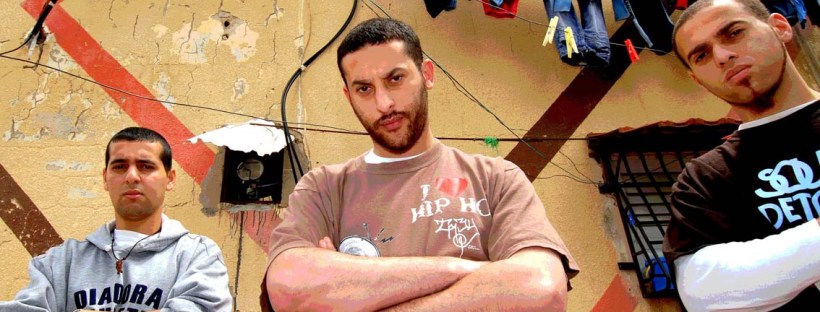
Rapper Tamer Nafar, a Palestinian citizen of Israel, performed at the Haifa Community Theatre Festival in October – despite calls from Israel’s Culture Minister to cancel his performance.  Regev had opined that public funds should not support activity that undermines the state, its values and symbols in the name of art and freedom of speech’ and accused Nafar of writing lyrics that legitimated terrorism . ‘I won’t let them silence me’, said Nafar, as ‘protestors in the audience booed at him and even gave him the middle finger, lifting up hands wrapped in the Israeli flag’. ‘And to those of you yelling and trying to ruin this,’ he added, ‘I can’t even bring myself to hate you’.

 Palestinians invade Israel in new video posted by Israel’s Foreign Ministry

Allison Kaplan Sommer, blogging in Ha’aretz (7th October), criticises a new propaganda film posted by Israel’s foreign ministry.  Sommer notes that the film ‘takes liberties’ with history, is insulting, and possibly racist. The film presents Jewish links with the territory of Israel as unshared and unbroken.  Other peoples, from Babylonians, to Greeks, to Arabs, to Ottomans are presented as a succession of invaders and interlopers. In the last scene of the film, the final group of aliens arrive: they are Palestinian.

Below the line commentators on her blog are forthright:

‘That the Israeli government would go out of its way to offend intelligent people with garbage like this is beyond belief’.

By the beginning of October, the film had received 150,000 views and had been shared more than 3,000 times.

‘Beautiful resistance’ meets cynical culture-washing on Edinburgh Fringe


Best singers

Alrowwad singers. Picture by Phil Chetwynd

The Edinburgh Fringe’s renowned open platform for all forms of artistic expression produced a curious juxtaposition this year, as Palestinians deployed creativity to shatter the bonds of political repression while Israeli state apologists cloaked a discredited political message in threadbare cultural clothing.

The gulf between the two was demonstrated in the pages of Scotland’s press, the airwaves and in the streets, as well as in performance and display spaces across the city.

Continue reading

ARTSWATCH August 2016

 Gaza’s celebrated Dawaween refused exit permits  [photo Shadi Alqarra]

Borders closed to musicians from Gaza

Israel opens the door to Western performers, but as far as Palestinian artists are concerned, the borders are closed. Middle East Eye (23rd August) reports on two cases where singers and musicians from Gaza have been denied access to other parts of occupied Palestine. Decisions made by the Israeli authorities have prevented the ‘Palestine Sings’ children’s choir from performing at the Palestine Choral Festival, while Gaza’s most popular band, Dawaween, was not given the exit permits that would have allowed it to perform at the Palestine International Festival.  The band responded with a protest performance at the Erez border point between Israel and Gaza. The full story is here.

Cement and Children’s Art

The German company HeidelbergCement owns quarries and cement works in the West Bank, extracting Palestinian natural resources, and transferring them to Israel.  Meanwhile, back in the city of Heidelberg where the company’s head office is located, the authorities have banned, according to the German press, an exhibition of paintings and drawings entitled “Experiences, Fears and Dreams – Children in Palestine.”  The event was supposed to host drawings from two rehabilitation centres in Gaza and Ramallah. Some of the pieces depicted aerial bombing and burning buildings. The city authorities explained that the exhibition was highly political, whereas the city was committed to neutrality.

Jenin,  Jenin

In 2002, Mohammed Bakri made a film – ‘Jenin,  Jenin’ – about the people of Jenin refugee camp,  in which they told what happened to them during the Israeli invasion of April 2002.It was banned by the Israeli film censorship board.  Though the ban was subsequently lifted, the persecution of Bakri did not stop. Ex-members of the Israeli Defence Force took legal action against him for defamation; screenings of his films have been disrupted, and his stage appearances have been the focus of protests by the Israeli right.  In a comment piece in Ha’aretz (3rd August, firewall) Bakri refers to the years of boycott and ostracism that he has experienced, and challenges Prime Minister Netanyahu’s claim to be a force for peace:

‘How can I believe your statements when on the ground the occupation continues to flourish, and plans for building thousands of apartments for Israeli Jews in the West Bank are published day after day?’

 Flying while Palestinian            

Ha’aretz reports (28th July ) that Israeli Palestinian actress Samar Qupty has written on Facebook about being delayed for two hours by security inspectors at Ben-Gurion Airport and forced to board her flight without her carry-on baggage.

Qupty, star of the Israeli film “Junction 48,” arrived at the airport for a flight to Colombia, where the film was being screened at a local film festival.  Airport security refused to let her bring her carry-ons aboard.

“I don’t know how I dared to think I had a right to fly to Colombia,” she wrote. “After all, it’s not clear what an Arab woman is going to do there by herself.”

Mohammed Abu Sakha – update (see Artswatch July)

The Palestinian Prisoner Network, Samidoun, reported on 27th July that Mohammed Abu Sakha, circus performer and trainer, had joined a prison hunger strike in support of Bilal Kayed. Kayed is protesting against his imprisonment without trial. Sakha, likewise, is an administrative detainee, whose case has not been taken to court.  The Palestinian Prisoner Support and Human Rights Association noted on 25th August, that Sakha’s appeal against administrative detention had been turned down.

Opposition mounts as Edinburgh Fringe marred by “pro-Israel advocacy event”

shalom fest logoThe 2016  Edinburgh Fringe once again offers a much-needed platform for  Palestinian artists to demonstrate their talent, creativity and vitality despite the  extraordinary difficulties they face in their daily lives and in producing, exhibiting and performing their work. But this year “the biggest arts festival on the planet” has shocked friends of Palestine with a last minute addition to the programme organised by groups committed to promoting Israeli interests and undermining those of Palestine. A letter of protest from Artists for Palestine UK is attracting growing support and a local campaign is gathering strength.

Sneaked onto the online programme after the printed version was published, the International Shalom Festival scheduled for August 17  is an initiative of COFIS, the Confederation of Friends of Israel Scotland, and StandWithUs – two pro-Israel advocacy organisations that work with the Israeli Embassy to undermine and oppose campaigning work in support of Palestinian rights.

Continue reading

Israel’s war on Palestinian media – Why no protest from the UK government?

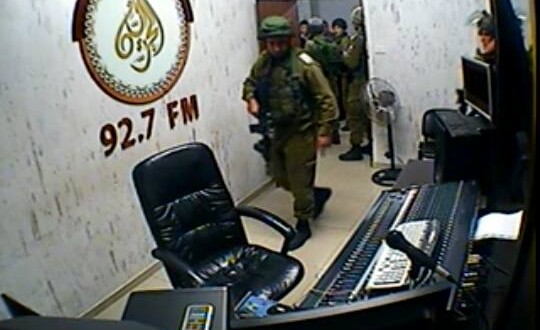
In March 2016, Israel continued its assault on Palestinian media organisations by closing down the TV station, Palestine Today, and arresting some of its staff. The British government, so vocal at other times in its defence of ‘democratic values’, responded only with silence.  The APUK collective sent this letter to the Foreign Secretary, Philip Hammond, to request that he apply the principles that apparently underpin his government’s domestic policy, to relations with Britain’s allies overseas. We await a reply.

Israeli troops invading Palestinian radio station. Picture:Palestine News Network.

Israeli troops invading Palestinian radio station. Picture:Palestine News Network.

Continue reading

Artists’ group tells Globe – Listen to Palestinians, don’t play Tel Aviv

 UPDATE: Globe actors defend playing in Israel “regardless of politics”
Shakespeare’s Globe theatre has ignored Palestinian appeals and the good counsel of a number of their UK peers by going ahead with their performance of Hamlet at the Cameri Theatre in Tel Aviv on March 30.
Showing  either ignorance of, or disregard for the highly politicised nature of culture in Israel-Palestine, members of the company justified their action at a press conference, stating, “It was clear to us that we would be coming to Israel, regardless of politics”  and “We try not to deal with local politics of the places to which we travel”.
As is usual when the Palestinian boycott picket line is crossed by international artists, Israeli media portrayed the Globe’s appearance as a failure for the cultural boycott movement.
This English-language news report is a prime example.
Statements made at their press conference by actors Keith Bartlett and Jennifer Lang were quoted in a Hebrew language report . Thanks to Ofer Neiman for the following translations into English.

“We travel all over the world, and politics is none of our business”, said Keith Bartlett (playing Polonius), adding “We are here to tell a story, and it is exciting to see how it is received everywhere we perform. It was clear to us that we would be coming to Israel, regardless of politics”   

Jennifer Lang (playing Ophelia): “We intend for this tour to tell its story to as many people across the world. Any viewer who is not a regular viewer of the Globe is an addition for us. We try not to deal with local politics of the places to which we travel”.

SHAKESPEARE’S GLOBE TOLD “DON’T GIVE THIS PERFORMANCE IN ISRAEL”

Why has Shakespeare’s Globe added a performance at Israel’s Cameri theatre  on March 30 to the tour schedule for its production of Hamlet, in breach of the boycott of institutions that reinforce the oppression of Palestinian artists and their communities?

This is the question addressed on Friday (March 25) to artistic director Dominic Dromgoole, as his ten year stint at the celebrated London theatre draws to a close, in an open letter signed by British and Palestinian theatre professionals.

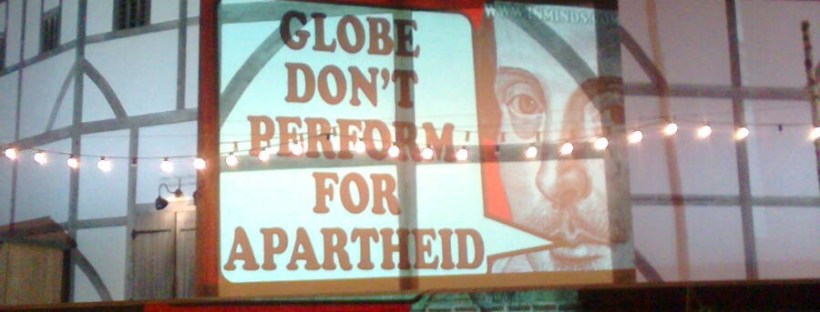
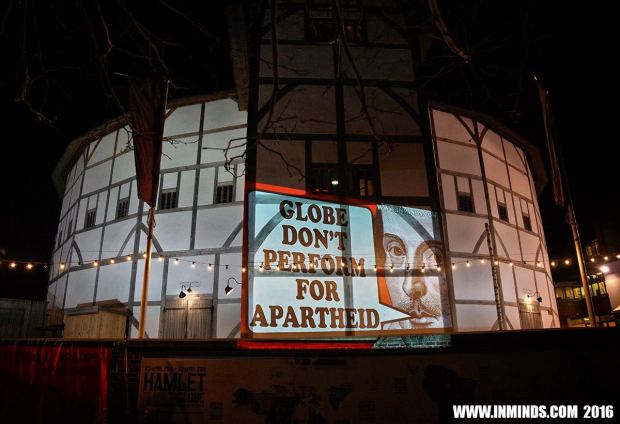
inminds Globe apartheid pic

Image projected on the Globe’s iconic riverside building by activists taking part in a protest organised by inminds.com in London on Friday

In 2012, 37 actors, writers and directors protested the fact that Shakespeare’s Globe had invited Habima, the national theatre of Israel, to take part in its Globe to Globe festival.   The specific ground for the protest was that Habima regularly performs in Ariel, the largest of Israel’s illegal settlements in the Occupied Territories.   A letter signed by the 37, including Mark Rylance who was Dromgoole’s predecessor as artistic director at the Globe, attracted considerable media attention and gave impetus to the cultural boycott campaign which is now supported by growing numbers of artists in all fields.

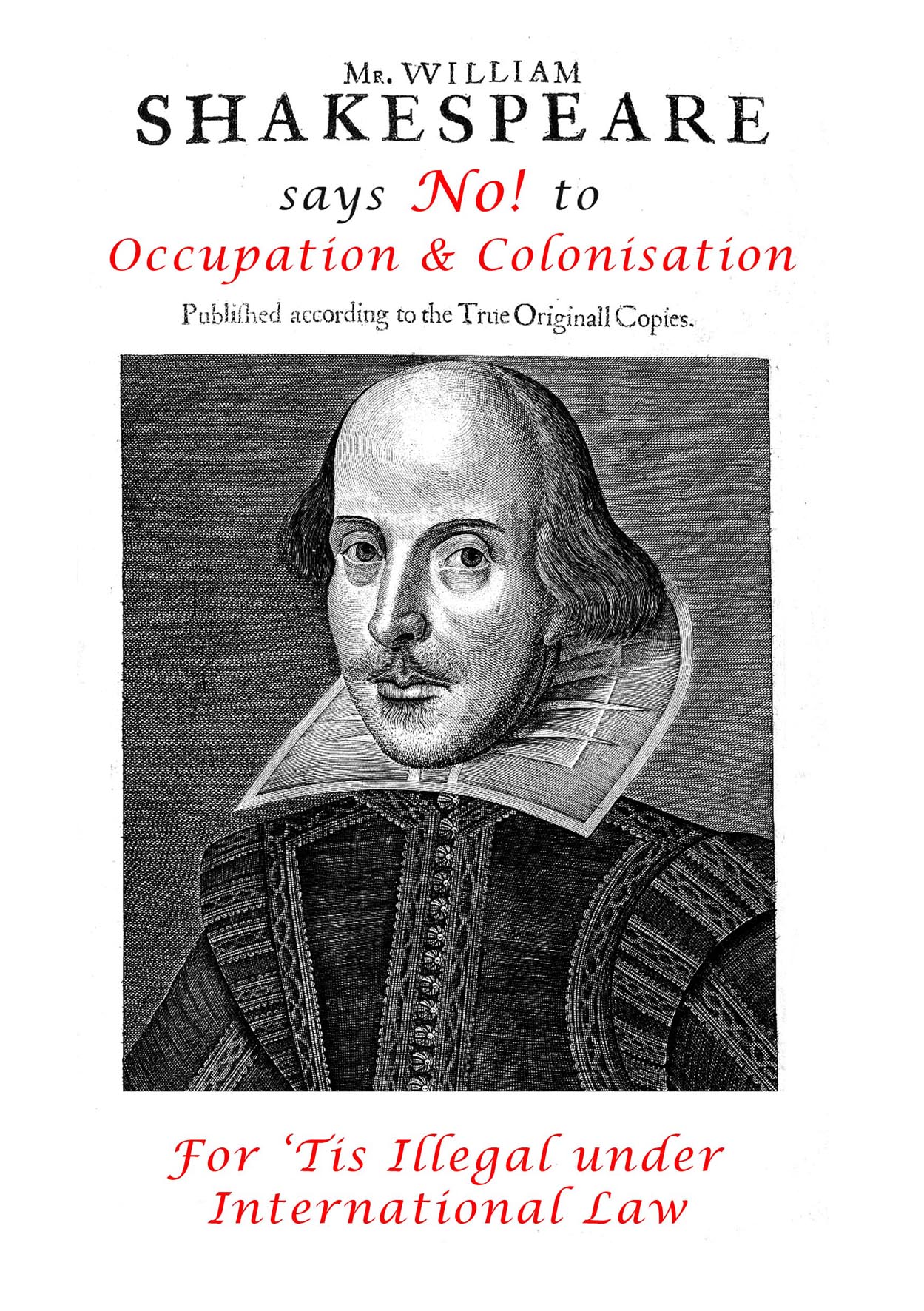
Flyer used during the protests against Shakespeare's Globe hosting Habima in May 2012

Flyer used during the protests against Shakespeare’s Globe hosting Habima in May 2012

Four years on, the management of the Globe can be in no doubt that adding the Cameri theatre to its schedule attracts at least as much opprobrium as the invitation to Habima in 2012. Continue reading

Top Oscar nominees invited to witness Palestinian life under Israeli occupation

UPDATE: Israel invited 26 Oscar stars to visit. So far none has. One year on: this report is picked up in a number of outlets internationally.

Oscar nominees: ‘Give your Israeli swag bag to a Palestinian refugee!’

Artists for Palestine UK (APUK) on Wednesday called on actors and directors on this year’s Oscars shortlist:  ‘Give your Israeli swag bag to a Palestinian refugee!’


  • Mike Leigh, film director and five-times Oscar nominee said:  A five-star trip to the land of their parents and grandparents is just what exhausted Palestinians from the refugee camps could do with. I think the world would be happy to see Israeli government money used for once to make reparations to Palestinians — and I hope the stars will agree.’
  • Ken Loach, BAFTA nominee and Palme d’Or winner said: “Just think what $55,000 could do for Palestinians whose homes have been destroyed and their lands stolen.  Let’s hope that film people can see through this crude propaganda.”
  • Brian Eno, musician and composer suggested an alternative swag bag offering: “Visit Palestine! Enjoy a tear-gas filled weekend in an East Jerusalem ghetto!

Continue reading

Roger Waters’ horror at French criminalisation of pro-Palestinian boycott


Musician Roger Waters speaks out against the criminalisation in France of non-violent boycott in defence of Palestinian rights. We reproduce his letter, picked up from a French news agency by the website Mondoweiss.
——————————————————

Mes Cher Citoyens,

Along with most thinking, feeling and compassionate members of global civil society, I deplore the occupation of Palestine and the subjugation of all of its non-Jewish peoples. The State of Israel’s anti-Palestinian discrimination since 1947/8 is unacceptable.

I am anti-racist, anti-colonialist, anti-war, anti-oppression, and anti- discrimination.

Continue reading

PACBI STATEMENT – Art should not be used to cover up apartheid: Boycott the Zabludowicz Art Trust!

The Palestinian Campaign for the Academic and Cultural Boycott of Israel (PACBI) has issued the following statement about the Zabludowicz  Art Trust.

pacbi logo

Art should not be used to cover up apartheid: Boycott the Zabludowicz Art Trust!

Occupied Palestine, October 26, 2015 — The Palestinian Campaign for the Academic and Cultural Boycott of Israel (PACBI) calls for a boycott of the Zabludowicz  Art Trust for its deep complicity in Israel’s regime of occupation, colonization and apartheid.

The Zabludowicz Art Trust directly supports Israel’s oppression of Palestinians through its funder, The Tamares Group, which is responsible for investments in Knafaim, an Israeli­-based holding company, focused on the aviation industry, with major holdings in several Israeli companies including Kanfey Tachzuka, which provides maintenance services to the Israeli Air Force[1], notorious for its ongoing commission of war crimes against Palestinian and Lebanese civilians. Continue reading

ARTISTS’ VERDICT – CULTURAL BRIDGES WITH ISRAEL LEAD NOWHERE

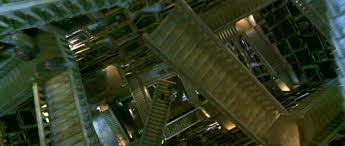
Like the staircases at Hogwarts, Israel's cultural bridges can lead interminably to nowhere

Like the staircases at Hogwarts, Israel’s cultural bridges can lead interminably to nowhere

The appearance last week of some famous UK cultural names on a statement defending Israel against boycott has sparked a wave of incredulity and outrage from fellow artists.

Artists, actors, writers, editors, musicians and filmmakers are among those queuing up to defend the boycott tactic after JK Rowling, Hilary Mantel and historian Simon Schama joined well-known pro-Israel lobbyists in attacking it. Rowling and co urged cultural ‘coexistence’ and ‘dialogue about Israel and the Palestinians’ and called the Palestinian boycott campaign “divisive and discriminatory”.

“It is Israeli policies towards Palestinians which are divisive and discriminatory,” said actress Miriam Margolyes, one of more than 1000 UK artists who have signed a commitment not to cooperate with Israeli state-funded cultural institutions as long as Palestinian rights are denied.
“Artists used the tactic of boycott against apartheid in South Africa and we are doing it again in support of Palestine– because no one else is holding Israel to account,” she said.

Composer Brian Eno, one of a number whose letters were published in the Guardian on October 27, said he appreciated the desire for dialogue, “but what kind of dialogue is realistically possible between a largely unarmed and imprisoned people whose land is disappearing before its eyes, and the heavily weaponised State that’s in the process of taking it.”  Continue reading

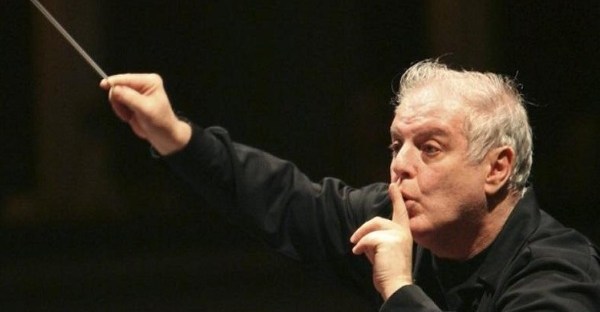
Finally Israel and Iran find common cause – against Daniel Barenboim: Artists for Palestine UK reaction

Daniel Barenboim, Israel and Iran: an APUK statement

Newspapers in Israel, the US and Europe reported last week that Daniel Barenboim, one of the world’s foremost pianists and conductors, was planning to take a Berlin orchestra [the Staatskapelle] to Iran for a concert. Immediately, Israel’s culture minister Miri Regev stepped in to call for the concert to be cancelled:

“This melody must be stopped. Barenboim promotes an anti-Israeli line and makes sure to bash [Israel] by using culture as a lever for his anti-Israel political views.” (1)

While the world was still digesting the hypocrisy of this demand from the minister of a government which, when threatened by boycott, never fails to talk the language of ‘communication’ and ‘bridge building’, Iranian officials said that they would block the concert because of Barenboim’s Israeli citizenship:

“The conductor of Germany’s symphonic orchestra is affiliated to Israel concerning his nationality and identity ,” the Spokesman of the Culture Ministry Hossein Noushabadi told reporters in Tehran. (2)

Continue reading

Brit band alt-J spurns Palestinian boycott, lifts spirits of Israel’s apartheid soldiers

This piece by Times of Israel founding editor David Horowitz perfectly demonstrates Israel’s desperate need for cultural nourishment from abroad to sustain its armed dominance over the Palestinian people.

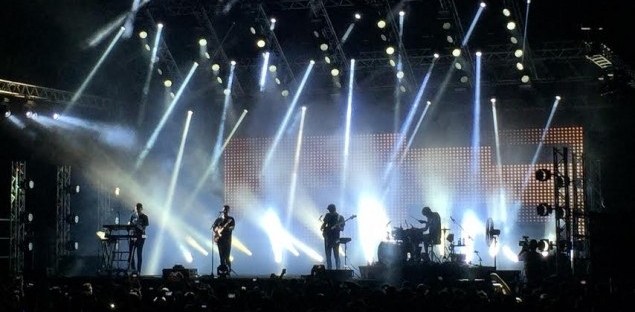
The Indie band alt-J, from Leeds in northeast England, ignored weeks of appeals from pro-Palestinian campaigners and broke the boycott  to  play two nights in Rishon Lezion just south of Tel Aviv on August 23 and 24. Horowitz’s purple prose exalts the audience who had flocked to the concert as “young Israel — army kids and post-army kids and tomorrow’s army kids”.

Alt-J were providing much-needed R&R for the soldiers who had decimated Gaza a year earlier and will do so again if called upon. It would be hard to find a clearer justification for the Palestinian cultural boycott campaign urged upon those who wish to see an end to Israeli apartheid.  (For a more prosaic write-up, see this piece in the Jerusalem Post .)

“ISRAEL’S BEAUTIFUL YOUTH LIFTED BY THE GOSPEL OF ALT-J
An English band’s soaring harmonies strike a chord with the soldiers of a year ago and tomorrow. Continue reading

Culture Minister Regev attacks artists, exposes Israel’s censorious culture policy

A petition signed by 2,000 Israeli artists has exposed the censorious instincts of the Israeli state, epitomised by its new Culture Minister Miri Regev.

A war of words between Israel’s new Culture Minister Miri Regev and a group of leading Israeli artists continued yesterday over budgetary allocations and allegations of censorship.
 Regev, who was appointed to the culture and sport portfolio in Israel’s new government, is considered a vocal firebrand leader in the right-wing of the Likud Party. Earlier this month, she warned that she would review funding of cultural initiatives and would not necessarily support those which she believes delegitimize the State of Israel.
The only Palestinian theatre company in Israel, Al-Midan, had its funding frozen this week because ministers disapproved of its latest play.

Continue reading

NEWS RELEASE – Actors, writers and directors denounce demonisation of Palestinian theatre

Let audiences be the judge of Palestinian theatre on UK tour
(NB this original text differs slightly from the version published by the Daily Mail on May 8)

As theatre practitioners in Britain, we are alarmed that the Daily Mail is attacking the Arts Council and the British Council for supporting a UK tour by a Palestinian theatre company.

Your piece, with its inflammatory title UK taxpayers fund ‘pro-terrorist’ play, cites “concerns” from the Board of Deputies of British Jews, an organisation with a shocking record of acting to suppress both cultural and academic events which explore the bitter reality of Palestinian existence. Only last month the University of Southampton succumbed to demonisation and threats and banned an academic conference on the legal status of Israel.

Neither the Daily Mail nor the Board of Deputies has seen Freedom Theatre’s play The Siege, yet both somehow feel qualified to suggest that it is “promoting terrorism”. Not for the first time, Palestinian voices are in danger of being drowned out by a vociferous pro-Israel lobby that smears all Palestinians as terrorists and antisemites. This lobby wants us to believe that theatre-goers in the UK cannot be trusted to hear these voices and make their own judgements.

The Palestinian West Bank, where the Freedom Theatre is based, has been under illegal Israeli military occupation since 1967. We endorse the words of British playwright Howard Brenton, an honorary director of the Freedom Theatre, who writes of the forthcoming tour:

“This is real political theatre, performed out of the both terrible and inspiring experience of a struggle for freedom and justice. [The Freedom Theatre] are living proof that telling stories and entertaining audiences are powerful acts of resistance to oppression. Do go and see them, they have news for us.”

Caryl Churchill
Dominic Cooke
April De Angelis
David Edgar
Lucy Kirkwood
David Lan
Miriam Margolyes
Paul Mayersberg
Maxine Peake
Mark Rylance
Jennie Stoller
Mark Thomas
Samuel West Continue reading

The response from Israel: ‘cheap propaganda’ & hate-filled satire

The antisemitism smear was the anticipated response of Israel’s apologists to the artists’ pledge for human rights. Indeed that is what makes signatories courageous individuals. What was feared but less anticipated was the extent to which that smear would be sharpened – and then given a platform in the mainstream press – to hold pledge signatories responsible for the deadly targeting of Jews.

Continue reading

Is this the Guardian’s notion of balance?

In the week following the publication of our letter announcing the launch of the artists’ pledge, the Guardian published several responses – on the letters page, and in Comment is Free (CiF). Of nine published letters, three were supportive. Our riposte (below) went unpublished. Novelist Kamila Shamsie’s piece on why she signed the pledge was easy to miss: it appeared only in the print edition, under ‘The week in Books’.

Unusually, an Israeli politician was given a slot in both sections of the newspaper. On the same day, a CiF piece appeared entitled ‘Those calling for a boycott of Israel are ignoring some painful truths‘, as well as a letter under the sensationalist and inflammatory headline, ‘Why no petition to protect Jewish people?‘. The author, chairperson of the Yesh Atid party, Yair Lapid, was even permitted to repeat his hasbara, so that Guardian readers are subjected twice to his derisory hyperbole suggesting an inevitable genocide of Israeli Jews would be on the consciences of the pledge signatories:

As artists – who by definition are people with imagination – are they willing to take a moment and consider what would happen if, following a call in the Guardian, the IDF puts down its weapons and stops protecting the people of Israel for 24 hours? If you don’t share the imagination of an artist let me tell you: radical Islamists would kill us all. Women and children first.

Continue reading

Theatre director Jonathan Chadwick: BDS crucially important element in resistance

Jonathan Chadwick – artistic director of Az Theatre, and a Pledge signatory – has written a blog post about his recent trip to the West Bank, which we think is worth sharing:

I went to Palestine on Saturday 7th February and came back on Sunday 15th February. I failed to get into Gaza to pursue the work on War and Peace.

Caryl Churchill and I worked on her recent play, Love and Information, at Ashtar Theatre. The British Council accommodated us. The Royal Court Theatre provided finance for the translation. We paid for the travel and did the work for free. It was our contribution, like planting a play in Palestine! Continue reading