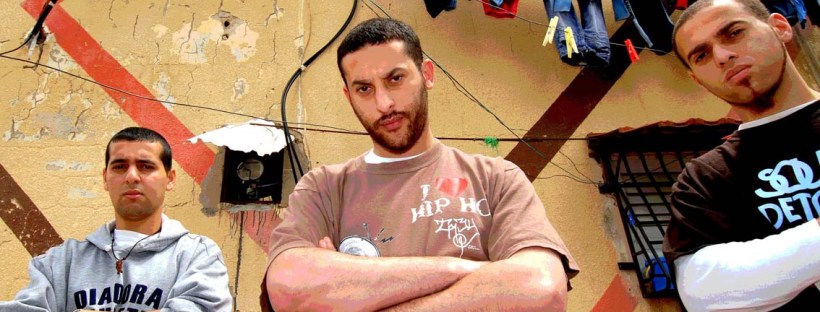
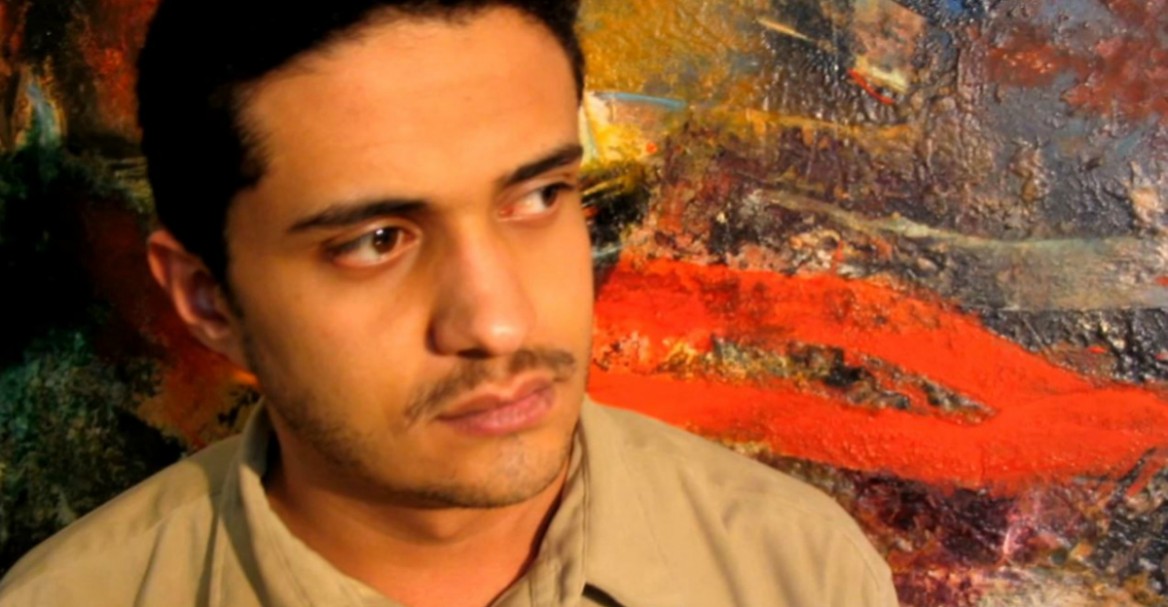
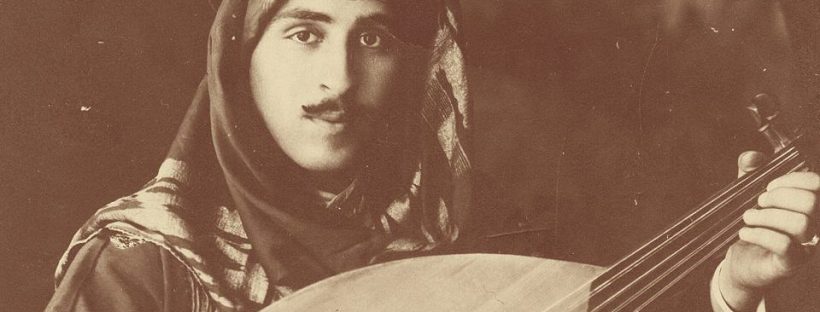
Mohammed Bakri, actor

ARTSWATCH November 2016

The dangers of satire

blog by ‘John Brown’ in +972 magazine (27thNovember) reports on recent experiences of the Bedouin blogger Anas Abudaabes.

The wild fires that swept through Northern Israel in mid-November provoked some Facebook posters in neighbouring countries into words of celebration. Abudaabes responded satirically, writing that the way to earn the respect of posters like these would obviously be to light more fires.

In paranoid and authoritarian states, satire is often a weapon that endangers the satirist. Israel’s legal system chose to take the words of Abudaabes literally, as an incitement to arson. On 25th November, Judge Alon Gabison ruled that there was reasonable suspicion that the post included incitement to harming state security, and that the author of the post should have thought about how others would interpret his words.  A judge in a higher court speedily confirmed this ruling. Abudaabes, freed on bail, was placed under house arrest for five days and not allowed to use Facebook for 15 days.

The episode suggests that in addition to the multitude of other restrictions it imposes  on the right of Palestinians to free expression, the Israeli state has now moved on to proscribing certain kinds of literary genre.  If you are a Palestinian, do not be a satirist.

The continuing ordeal of Dareen Tatour

In June and July, Artswatch reported on the situation of Dareen Tatour, jailed and then placed under house arrest for poems and other writing that she posted on Facebook.  In November, PEN International took up Dareen’s case, featuring her as one of the ‘Imprisoned Writers’, whose freedom it is demanding. On 24th November, Samidoun, the Palestinian Prisoner Solidarity Network, reported that the court that is hearing her case will reconvene on 26th January – and that Dareen’s period of house arrest has been extended accordingly. Dareen faces the possibility of a lengthy prison sentence, as Israel continues to escalate its war against a militant Palestinian presence on social media.

Fighting back against Facebook

 Charlotte Silver reports on Electronic Intifada (16th November) that Palestinian groups have joined with black and civil rights activists in the US to protest against the increasing tendency of Facebook  – documented in September Artswatch – to block material at the behest of states. ‘Facebook’, a spokeswoman for the Oakland-based Center for Media Justice told the Guardian, is ‘a platform where people are documenting human rights injustices and breaking news’, yet for both black activists and Palestinians, it is a platform which is getting narrower by the month.

Confirming the CMJ’s claim, Samidoun, the Palestinian Prisoner Solidarity Network, reports that Facebook has granted 95 percent of Israel’s 158 requests to remove content in the last four months. Alongside this persistent pressure on internet companies, Israel continues to persecute individuals. Palestinian journalist Khalid Maaliimprisoned on the basis of his social media posts, was released by court order in mid-November – but only on the condition that he turn over his laptop to Israeli occupation forces and close his Facebook account, as well as paying a fine of $1700.

Miri Regev and the absolute politicisation of culture

Writing on AlJazeera’s website, Jonathan Cook (10th November) catalogues the long list of interventions made by Israel’s far-right culture minister, Miri Regev, since she took office 18 months ago.  Aiming to ‘silence the Palestinian narrative’ Regev has been swift to denounce the broadcasting and performance of poems about the Palestinian experience. At the same time, she is completely explicit that Israeli cultural institutions should see themselves as arms of the Israeli state, supporting its policies: theatre companies which refuse to perform in the occupied territories will find themselves under-funded (see Artswatch October).

Cook notes that Regev’s efforts are increasingly successful: ‘people are starting to self-censor’, says the Palestinian rapper Tamer Nafar, ‘the worst kind of censorship’.  Yet, Cook concludes, there may be one positive side to Regev’s activities: for decades, those who have wanted to protect Israel from cultural boycott have argued that ‘culture’ exists in a different realm to ‘politics’, and that the border between them should not be crossed.  Tenuous at the best of times, under Regev this claim has lost all credibility: in a society where culture has become just another channel for the politics of occupation, the case for boycott is strengthened.

The occupying power bans the call to prayer

 Cultural repression is not limited to theatre and poetry.  Middle East Monitor reports that the Israeli government is supporting the passage through parliament of a bill that will criminalise the use in occupied East Jerusalem of the loudspeakers that call Palestinian Muslims to prayer.  The proposed ban is another step in the removal of the cultural presence of Palestinians from the occupied city: just as homes are demolished, so the material signs of Palestinian culture are effaced.  Commenting on the move, Arab-Israeli MP Haneen Zoabi said that the proposed law was an attempt to change the culture and life in the occupied city. “This is part of the culture of the Arabic city and has been there since before the Israeli occupation,” she said. “For those, who are not happy with it, they have to go back home to Europe.”

Ashraf Fayadh – his poems translated

 The Palestinian poet Ashraf Fayadh, convicted of heresy, remains a prisoner in a Saudi jail (see Artswatch June and Artswatch July). The US publication Publishers Weeklyreports that English-speaking readers can now read his poems in a new collection, ‘Instructions Within’, produced by the independent publishing house, The Operating System.

Mohammed Bakri, actor – sign the petition

 In August, Artswatch reported on the continuing persecution of actor and film-maker Mohammed Bakri, director of ‘Jenin, Jenin’.  The Avaaz petition in support of Mohammed can be signed here.

ARTSWATCH October 2016

‘The National Puppet Theatre of Israel’

Habima, Israel’s National Theatre, has announced that in mid-November it will put on a show in Kiryat Arba. Kiryat Arba is a settlement in territory illegally occupied by Israel, and a place which, in the words of an editorial in Ha’aretz (26th October), ‘has become a symbol of the injustices of the occupation and the settlements’.

Habima has performed in the occupied territories before – notably in Ariel in 2012. Then, the theatre’s co-director, Odelia Friedman, stated ‘Habima will perform for all residents of Israel. Residents of Ariel are residents of Israel and Habima will stage shows for them.’ Habima has now reaffirmed its support for occupation, again in the language of national inclusion.   According to Ha’aretz, it ‘rejects with repugnance any call to exclude citizens and to exclude communities, and condemns any attempt at a cultural boycott in any place where Israeli citizens live’. Supporting the state-funded theatre, Israel’s culture minister, Miri Regev, said: ‘the decision to perform for the first time in Hebron exemplifies the national theatre’s being a central pioneer in treating all citizens of the state as equal in their right to experience culture.’

Ha’aretz describes the decision as ‘a moral stain worthy of condemnation’ and describes Habima as the ‘national puppet theatre of the Israeli state’.

Habima’s latest actions confirm the timeliness of the ‘apology video’ produced by Norwegian artists, directed at the collaboration of Norway’s national theatre with Habima, and calling for European theatres to break their links to the Israeli company. (See Artswatch September).

Palestinian children dance in Sheffield – and are arrested by Israel

 The Sheffield Star (16th October) reports that three 14 year old boys, dancers in the Lajee Dance Troupe, have been arrested in a night raid by the Israeli military. The Lajee Centre is located in the Aida refugee camp, a settlement of 6000 people surrounded on two sides by Israel’s separation wall.

In October last year, an Israeli army sniper killed 13 year-old Abed al-Rahman Obeidallah in the streets of the camp. This year, attacks by the Israeli army on the Lajee Centre have escalated since August, when Celtic football fans raised over £170,000 divided between the Centre and Medical Aid for Palestinians. On 19th September, soldiers attacked the Lajee Centre with teargas and rubber bullets. The following night they forced open the gate of the centre, threw tear gas grenades inside and closed the gate, trapping children inside, forcing them to inhale toxic teargas.

The three boys have been released on bail but will be tried by an Israeli military court.  In April this year 414 children under 18 were held in military detention by Israel; year on year, the number is rising.

The Art of Silencing: Berlin

The Berlin Festival ‘After the Last Sky’ (September-October 2016)  brought together theatre, film, performance, literature, spoken word, dramatic readings, music, and dance, in events  dedicated to the ‘artistic diversity of Palestinian narratives and visions’. In the words of its opening statement, it asked ‘what can we understand about our universal human condition through the example of Palestine and Palestinian narratives?’

Inna Michaeli, blogging for the magazine +972, writes that ‘After The Last Sky’ has been attacked as antisemitic and as an instance of ‘Israel hounding’ by right-wing press commentators – and also by a leader of the German Left Party, Die Linke.  Klaus Lederer, party president in Berlin, quoted in Die Tagesspiegel, 21st October, claims that in referring to ‘apartheid’ and ‘colonialism’, the event has crossed the line between culture and propaganda. The decision of city government institutions to fund the event has been called into question.

Michaeli notes that ‘the very existence of Palestinian identity and culture’ is construed as antisemitic. The politics of Miri Regev have taken root in Berlin.

Even the dead are not safe

Writing in Electronic Intifada, 3rd November, Charlotte Silver reports that the Israeli Antiquities Authority has been outsourcing the management of major archaeological excavations and sites in Jerusalem to Elad, ‘a private organization that settles Jews in the militarily occupied eastern part of the city in violation of international law’. Elad manages the so-called City of David, a settlement containing an archaeological museum catering to tourists.

With the backing of the Israeli government, notes the alternative archaeology group Emek Shaveh, Elad is engaged in a double project: attempting to construct an historical narrative that emphasises the identity of Jerusalem as a Jewish city, while erasing artifacts from other cultures and wrecking the Palestinian heritage.  At the same time, the requirements of archaeological research and recreation, are put forward as a reason for destroying Palestinian homes.

Palestinian rapper performs, is booed on stage following Regev ‘terror’ accusations.

Rapper Tamer Nafar, a Palestinian citizen of Israel, performed at the Haifa Community Theatre Festival in October – despite calls from Israel’s Culture Minister to cancel his performance.  Regev had opined that public funds should not support activity that undermines the state, its values and symbols in the name of art and freedom of speech’ and accused Nafar of writing lyrics that legitimated terrorism . ‘I won’t let them silence me’, said Nafar, as ‘protestors in the audience booed at him and even gave him the middle finger, lifting up hands wrapped in the Israeli flag’. ‘And to those of you yelling and trying to ruin this,’ he added, ‘I can’t even bring myself to hate you’.

 Palestinians invade Israel in new video posted by Israel’s Foreign Ministry

Allison Kaplan Sommer, blogging in Ha’aretz (7th October), criticises a new propaganda film posted by Israel’s foreign ministry.  Sommer notes that the film ‘takes liberties’ with history, is insulting, and possibly racist. The film presents Jewish links with the territory of Israel as unshared and unbroken.  Other peoples, from Babylonians, to Greeks, to Arabs, to Ottomans are presented as a succession of invaders and interlopers. In the last scene of the film, the final group of aliens arrive: they are Palestinian.

Below the line commentators on her blog are forthright:

‘That the Israeli government would go out of its way to offend intelligent people with garbage like this is beyond belief’.

By the beginning of October, the film had received 150,000 views and had been shared more than 3,000 times.
‘Beautiful resistance’ meets cynical culture-washing on Edinburgh Fringe


Best singers

Alrowwad singers. Picture by Phil Chetwynd

The Edinburgh Fringe’s renowned open platform for all forms of artistic expression produced a curious juxtaposition this year, as Palestinians deployed creativity to shatter the bonds of political repression while Israeli state apologists cloaked a discredited political message in threadbare cultural clothing.

The gulf between the two was demonstrated in the pages of Scotland’s press, the airwaves and in the streets, as well as in performance and display spaces across the city.

Continue reading

ARTSWATCH August 2016

 Gaza’s celebrated Dawaween refused exit permits  [photo Shadi Alqarra]

Borders closed to musicians from Gaza

Israel opens the door to Western performers, but as far as Palestinian artists are concerned, the borders are closed. Middle East Eye (23rd August) reports on two cases where singers and musicians from Gaza have been denied access to other parts of occupied Palestine. Decisions made by the Israeli authorities have prevented the ‘Palestine Sings’ children’s choir from performing at the Palestine Choral Festival, while Gaza’s most popular band, Dawaween, was not given the exit permits that would have allowed it to perform at the Palestine International Festival.  The band responded with a protest performance at the Erez border point between Israel and Gaza. The full story is here.

Cement and Children’s Art

The German company HeidelbergCement owns quarries and cement works in the West Bank, extracting Palestinian natural resources, and transferring them to Israel.  Meanwhile, back in the city of Heidelberg where the company’s head office is located, the authorities have banned, according to the German press, an exhibition of paintings and drawings entitled “Experiences, Fears and Dreams – Children in Palestine.”  The event was supposed to host drawings from two rehabilitation centres in Gaza and Ramallah. Some of the pieces depicted aerial bombing and burning buildings. The city authorities explained that the exhibition was highly political, whereas the city was committed to neutrality.

Jenin,  Jenin

In 2002, Mohammed Bakri made a film – ‘Jenin,  Jenin’ – about the people of Jenin refugee camp,  in which they told what happened to them during the Israeli invasion of April 2002.It was banned by the Israeli film censorship board.  Though the ban was subsequently lifted, the persecution of Bakri did not stop. Ex-members of the Israeli Defence Force took legal action against him for defamation; screenings of his films have been disrupted, and his stage appearances have been the focus of protests by the Israeli right.  In a comment piece in Ha’aretz (3rd August, firewall) Bakri refers to the years of boycott and ostracism that he has experienced, and challenges Prime Minister Netanyahu’s claim to be a force for peace:

‘How can I believe your statements when on the ground the occupation continues to flourish, and plans for building thousands of apartments for Israeli Jews in the West Bank are published day after day?’

 Flying while Palestinian            

Ha’aretz reports (28th July ) that Israeli Palestinian actress Samar Qupty has written on Facebook about being delayed for two hours by security inspectors at Ben-Gurion Airport and forced to board her flight without her carry-on baggage.

Qupty, star of the Israeli film “Junction 48,” arrived at the airport for a flight to Colombia, where the film was being screened at a local film festival.  Airport security refused to let her bring her carry-ons aboard.

“I don’t know how I dared to think I had a right to fly to Colombia,” she wrote. “After all, it’s not clear what an Arab woman is going to do there by herself.”

Mohammed Abu Sakha – update (see Artswatch July)

The Palestinian Prisoner Network, Samidoun, reported on 27th July that Mohammed Abu Sakha, circus performer and trainer, had joined a prison hunger strike in support of Bilal Kayed. Kayed is protesting against his imprisonment without trial. Sakha, likewise, is an administrative detainee, whose case has not been taken to court.  The Palestinian Prisoner Support and Human Rights Association noted on 25th August, that Sakha’s appeal against administrative detention had been turned down.

Artists for Palestine UK protests Brand Israel on the Fringe

Palestinian youngsters from Alrowwad Cultural and Arts Society appearing on the Edinburgh Fringe in August

Palestinian youngsters from Alrowwad Cultural and Arts Society appearing on the Edinburgh Fringe in August.

Artists for Palestine UK has written to the organisers of the 2016 Edinburgh Fringe enclosing a letter of protest from the founder of Alrowwad Cultural and Arts Society in Aida refugee camp, Bethlehem, over the inclusion on the Fringe programme of an event billed as “probably the most significant pro-Israel advocacy event of the year in the United Kingdom”.

Continue reading

Threat of 800 lashes hangs over Palestinian poet in Saudi jail

Palestinian artist, curator and poet Ashraf Fayadh is serving an eight year term in a Saudi jail, sentenced to receive 800 lashes for alleged apostasy. Here a member of the Artists for Palestine UK collective reviews the significance of this alarming case.

Ashraf Fayadh

Ashraf Fayadh

Continue reading

Israel’s war on Palestinian media – Why no protest from the UK government?

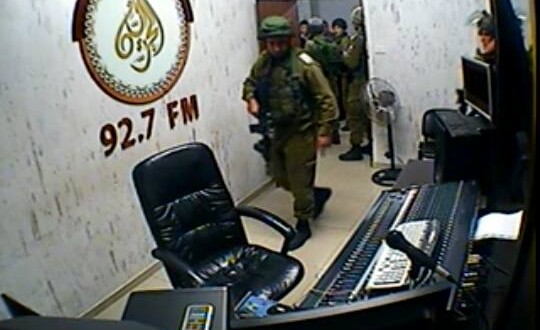
In March 2016, Israel continued its assault on Palestinian media organisations by closing down the TV station, Palestine Today, and arresting some of its staff. The British government, so vocal at other times in its defence of ‘democratic values’, responded only with silence.  The APUK collective sent this letter to the Foreign Secretary, Philip Hammond, to request that he apply the principles that apparently underpin his government’s domestic policy, to relations with Britain’s allies overseas. We await a reply.

Israeli troops invading Palestinian radio station. Picture:Palestine News Network.

Israeli troops invading Palestinian radio station. Picture:Palestine News Network.

Continue reading

Freedom Theatre defies all odds to tell their “absolutely compelling” story

Discussion with The Freedom Theatre from Jenin

As the Freedom Theatre’s first ever UK tour draws to a close, we are proud to be able to post a short film (27 minutes) offering insights into the experience of members of the company, and also the audiences who have flocked to see The Siege at 10 venues from Manchester to Hastings, Colchester to Glasgow, where the tour ends on June 20.

The play tells the story of a group of armed men who sought sanctuary in arguably the world’s holiest site, the Church of the Holy Nativity, in Bethlehem in 2002. Based in Jenin refugee camp in the West Bank, Freedom Theatre rose out of the resistance to Israeli occupation, survived the brutal killing of its founder Juliano Mer Khamis, and continues to exemplify Palestinian cultural resistance in the face of intimidation and harrassment, which even followed it to the UK.

Filmed at the post-performance panel discussion after their first show at London’s Battersea Arts Centre on May 19, the video makes inspiring viewing for supporters of Palestinian artistic expression, whether or not they have seen the play itself. Continue reading

Palestinian artists speak: boycott directed against apartheid system of occupation & discrimination

My name is Abdelfattah Abusrour. I am director of Alrowwad cultural and theatre training society, which I founded with a group of friends in 1998 in Aida refugee camp in Bethlehem, Occupied Palestine, where I was born, to create a safe space of beautiful expression, a philosophy that I call beautiful resistance against the ugliness of occupation and its violence… and to help our children and youth to see their potential as change makers, without needing to carry a gun and shoot everybody else…

In May 2002, Alrowwad theatre centre was vandalised by the Israeli army. They broke our video cameras and computers, and emptied oil and acrylic painting tubes all over the space. During our tours in the West Bank, many checkpoints forbid us passage with our theatre or dance shows and our play bus. We wait for hours, sometimes without being allowed to pass south to Hebron or to the north. No access is granted to Gaza, to East Jerusalem or 1948 Palestine.

Theatre and arts are about giving a voice to those who are not heard, and defending what we believe is just and right… That is why for me as an artist, as a theatre practitioner, I boycott every relation with Israeli artists or academics or politicians… Continue reading

Theatre director Jonathan Chadwick: BDS crucially important element in resistance

Jonathan Chadwick – artistic director of Az Theatre, and a Pledge signatory – has written a blog post about his recent trip to the West Bank, which we think is worth sharing:

I went to Palestine on Saturday 7th February and came back on Sunday 15th February. I failed to get into Gaza to pursue the work on War and Peace.

Caryl Churchill and I worked on her recent play, Love and Information, at Ashtar Theatre. The British Council accommodated us. The Royal Court Theatre provided finance for the translation. We paid for the travel and did the work for free. It was our contribution, like planting a play in Palestine! Continue reading

UK theatre director blogs his trip to Palestine

Jonathan Chadwick is artistic director of Az Theatre:

The aim was to visit my colleagues in Gaza in order to pursue our project to create an original new Arabic stage adaptation of Tolstoy’s War and Peace in Gaza. Now it looks quite unlikely that I will get permission from the Israelis. But I will still be going to the West Bank.

… Theatre for Everybody in Gaza have produced a good Arabic translation of a stage adaptation that was produced in the 1950 in Germany. We have presented two events as benefits to finance the work. Both events were at Rich Mix. One in September and the other in January. At both these events there were readings of stage adaptations of Tolstoy’s works and skype conversations with our colleagues in Gaza.

The work in Gaza has been held up by the recent ‘war’ and the subsequent ‘peace’. The situation there is dreadful. We thought that if I visited Gaza and worked with Theatre for Everybody it would get things moving and it would help to break down the isolation they feel.

He will be joined by playwright Caryl Churchill: Continue reading